How AI Crawlers and Agents Actually Work
When someone asks ChatGPT, Gemini, Claude, Perplexity, Grok, Google AI Mode or Microsoft Copilot a question, does an AI bot immediately visit your website, read the information, and generate an answer? This assumption creates a major misunderstanding about how AI visibility works.
Understanding the AI Crawlers working Mechanism and process requires separating website discovery from query-time information retrieval. These activities are related, but their execution depends on the architecture, search infrastructure, and product capabilities of each AI platform.
For SEO professionals, developers, website designers, and SaaS decision-makers, this distinction changes how technical GEO should be implemented. Optimizing for crawler accessibility alone cannot ensure that a website becomes part of an AI-generated answer.
This guide examines the individual mechanisms behind ChatGPT, Google AI Search, Claude, and Microsoft Copilot, explains their documented differences, and identifies practical steps for making website information more accessible, understandable, and useful to compatible retrieval systems.
Two Timelines Behind AI Visibility
One of the most important technical GEO concepts is that website content acquisition and user-query processing usually happen at different times. Understanding these two stages prevents incorrect assumptions about what AI crawlers actually do.
PRE-QUERY
Website
↓
Crawler / Fetcher
↓
Render / Parse
↓
Index / Representation
↓
– – – – – – – – – – – – –
QUERY-TIME
User goal
↓
Query understanding
↓
Search / grounding decision
↓
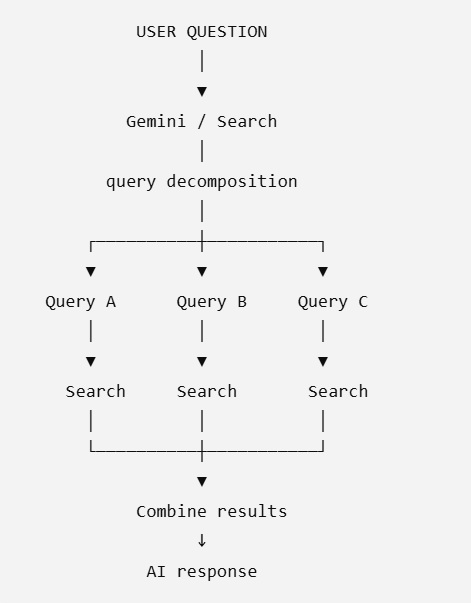
Query reformulation / decomposition
↓
Retrieval
↓
Ranking / reranking / selection
↓
Passage / source extraction
↓
Grounding / context construction
↓
LLM reasoning + synthesis
↓
Answer generation
↓
Citation / attribution
Pre-Query: Website Content Acquisition
Before a user asks a question, search crawlers may already have discovered and processed relevant website content. These systems request URLs, receive HTTP responses, extract information, follow links, and prepare representations for future search or retrieval activities.
A simplified acquisition sequence is website discovery, crawler request, HTTP response, rendering or parsing, content extraction, and indexing or another searchable representation. Not every provider uses the same infrastructure or publicly describes every stage.
- Discovery: Find URLs through links, sitemaps, or other supported sources.
- Access: Request website resources according to applicable permissions and technical conditions.
- Parsing: Extract text, links, metadata, and supported content.
- Representation: Prepare information for relevant search or knowledge systems.
- Availability: Make eligible information potentially available for later retrieval.
Query-Time: AI Answer Construction
When a user submits a question, an AI product may activate a separate search or grounding process. Depending on the question and product mode, that process can use existing indexes, live search, connected knowledge sources, or other tools.
The query may be interpreted, rewritten, or divided into related searches. Retrieved information can then be evaluated, selected, assembled into context, and used during generation. Citations may accompany the answer when the product supports them.
Technical distinction: A scheduled crawler is not normally launched to crawl every relevant website from scratch whenever a user asks a question. However, some products also support user-triggered fetching or live web requests, so this separation is not absolute.
AI SEARCH • GEO • RETRIEVAL • CITATIONS
Is Your Brand Retrievable When AI Searches for Your Category?
Find the gaps affecting your AI visibility across technical SEO, content retrievability, entity signals, citations and search intent.
Technical SEO • GEO • AI Visibility • Retrievability • Entity Architecture • Content Systems
const name = document.getElementById('ai-name').value.trim(); const email = document.getElementById('ai-email').value.trim(); const website = document.getElementById('ai-website').value.trim(); const objective = document.getElementById('ai-objective').value; const requirement = document.getElementById('ai-requirement').value.trim();
const whatsappNumber = '919703181624';
const message = 'Hello Ram, I would like to discuss AI Search / GEO optimization.%0A%0A' + 'Name: ' + encodeURIComponent(name) + '%0A' + 'Business Email: ' + encodeURIComponent(email) + '%0A' + 'Website: ' + encodeURIComponent(website) + '%0A' + 'Objective: ' + encodeURIComponent(objective) + '%0A' + 'Current Situation: ' + encodeURIComponent(requirement);
window.open( 'https://api.whatsapp.com/send?phone=' + whatsappNumber + '&text=' + message, '_blank' ); });
How Individual AI Platform bots / Crawlers Work
AI platforms use different crawlers, fetchers, and product controls. Some support search discovery, others assist user-triggered access, and some govern model-training-related usage. Understanding each role is more useful than treating every AI bot as equivalent.
OpenAI: OAI-SearchBot, GPTBot and ChatGPT-User
OpenAI documents distinct user-agent identities for different purposes. OAI-SearchBot supports discovery for ChatGPT search experiences, GPTBot relates to potential model-training use, and ChatGPT-User is associated with certain user-initiated website requests.
These identities matter because publishers can make different access decisions. Allowing a search crawler should not be confused with granting model-training permission, and a user-triggered request should not automatically be interpreted as scheduled search indexing.
User prompt
↓
ChatGPT interpretation
↓
Search decision
↓
Query rewrite
↓
One or more search-provider queries
↓
Results
↓
Additional search if necessary
↓
Answer synthesis
↓
Citations
Google: Googlebot and Product Controls
Googlebot supports Google Search crawling and indexing. Google also maintains specialized crawlers and user-triggered fetchers. Its Google-Extended control addresses specified AI-related uses of crawled content rather than acting as a separate conventional search crawler.
Google explicitly states that Google-Extended is not a Google Search ranking signal. Its controls must therefore be evaluated separately from ordinary Google Search eligibility and the indexed content used in AI Overviews or AI Mode.
Anthropic: Claude Search and Fetching
Anthropic identifies distinct crawler and fetching roles associated with Claude services. Claude-SearchBot supports search-related discovery, while other identified agents serve different purposes, including training-related crawling and certain user-directed access activities.
Claude’s web-search product can process multiple sources and present direct citations. However, Anthropic does not publicly expose a complete proprietary ranking, reranking, or passage-selection algorithm for every Claude web-search request.
User question
↓
Claude determines web search is useful
↓
Web search
↓
Multiple sources
↓
Source processing
↓
Grounded generation
↓
Citations
Microsoft: Bingbot and Search Infrastructure
Bingbot is Microsoft’s web crawler associated with Bing search discovery and indexing. Microsoft Copilot products may then use Bing search infrastructure to obtain web information that helps ground generated responses.
This does not mean Bingbot executes every Copilot question. A Copilot product can generate a search request against Bing, receive relevant results, and incorporate that information into its response without a fresh crawler visit to every source.
User prompt
↓
Prompt parsing
↓
Identify terms where web information helps
↓
Generate search query
↓
Bing
↓
Search results
↓
Grounding
↓
Generated response
| Platform | Crawler or Control | Primary Documented Role |
|---|---|---|
| OpenAI | OAI-SearchBot | ChatGPT search discovery |
| OpenAI | GPTBot | Potential model-training content collection |
| OpenAI | ChatGPT-User | Certain user-triggered website requests |
| Googlebot | Google Search crawling and indexing | |
| Google-Extended | Control over specified Gemini-related content uses | |
| Anthropic | Claude-SearchBot | Claude search-related discovery |
| Microsoft | Bingbot | Bing search crawling and indexing |
Platform-Specific Query Orchestration
The largest differences appear after a question reaches the AI product. Search activation, query transformation, retrieval, result selection, and grounding can vary substantially, even when multiple platforms answer the same user request.
ChatGPT: Query Rewriting and Follow-Up Searches
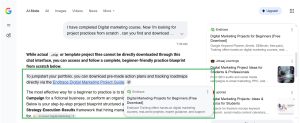
OpenAI documents that ChatGPT Search may rewrite a user’s request into one or more targeted queries for search providers. After examining initial results, it can perform additional searches to collect more relevant information.
For example, a user asking about SaaS security compliance may trigger searches involving security frameworks, regulatory obligations, implementation guidance, and product-specific requirements. These are illustrative query possibilities, not a disclosed execution trace.
The GEO implication is that content should answer meaningful subtopics rather than depend exclusively on an exact phrase from the user’s original prompt. Clear definitions, technical context, and supporting evidence become important.
Google AI Search: Query Fan-Out
Google documents query fan-out in AI Overviews and AI Mode. This technique can issue multiple related searches across subtopics and data sources, helping the system collect information for complex comparisons and multi-part questions.
A question about selecting cloud infrastructure might involve related searches covering performance, cost, reliability, security, scalability, and implementation. A single answer may therefore draw from multiple pages that address different parts of the decision.
Google states that supporting web pages in these AI Search features must be indexed and eligible for a Search snippet. Its documented approach makes conventional Google Search accessibility an important technical foundation.
Claude: Web Search and Source Processing
Anthropic documents that Claude can invoke web search when current information is useful. It may process multiple sources and produce grounded responses containing direct citations and links to supporting material.
The exact proprietary source-ranking and reranking mechanisms are not publicly specified in sufficient detail to reconstruct every internal stage. A GEO audit should therefore distinguish documented web-search behavior from assumptions about private retrieval technology.
Microsoft Copilot: Bing Grounding
Microsoft documents that certain Copilot products extract relevant terms from a user prompt and generate a focused search query. That query is sent to Bing, which returns information that can support response generation.
Copilot Studio documentation describes additional processing for some Bing-grounded configurations, including result parsing, grounding checks, provenance assessment, and semantic similarity checks. Those documented details apply to the stated product mechanisms rather than every Copilot experience.
For deeper technical study, explore the GEO Technical Retrieval Architecture and Mechanism and how retrieval connects with source selection, grounding, and answer generation.
Comparing AI Platform Mechanisms
The statement that AI systems use the same GEO execution process is technically incorrect. They share broad functional goals, but individual products can operate through different retrieval systems, query strategies, content representations, and grounding architectures.
| Function | ChatGPT Search | Google AI Search | Claude Web Search | Microsoft Copilot |
|---|---|---|---|---|
| Query processing | Targeted query rewriting | Possible subtopic fan-out | Web-search activation | Focused query generation |
| Web information | Search providers and supported search infrastructure | Google Search infrastructure | Claude web-search tools | Bing search services |
| Additional retrieval | Additional targeted searches possible | Related searches across subtopics | Multiple-source processing documented | Depends on Copilot product |
| Grounding | Search information used in answers | Search-based supporting information | Web-supported generation | Bing-based grounding |
| Internal ranking | Not fully disclosed | Not fully disclosed | Not fully disclosed | Not fully disclosed |
Product mode is another important variable. Google Search AI Mode and Gemini Apps should not be modeled as identical products. Similarly, Claude Web Search, Copilot Studio, and standard conversational modes can have different capabilities and data sources.
The practical lesson for technical GEO architecture is to optimize stable website fundamentals while testing platform-specific outcomes. It is neither necessary nor credible to claim knowledge of private retrieval weights or undisclosed citation-scoring formulas.
Why AI Citations Differ
Why might ChatGPT reference one website while Google’s AI Mode links to another for a similar question? The explanation starts with differences in search infrastructure, query transformation, candidate sources, content relevance, and answer construction.
Two systems may generate different search queries from the same question. They may also have different content coverage, retrieval timing, source-selection methods, and product-specific grounding requirements, creating different sets of supporting references.
Retrieval Is Not Citation
A page can be discovered without being indexed. It can be indexed without being retrieved. It can be retrieved without becoming useful grounding context. Even selected supporting information may not appear as a visible citation.
These transitions explain why a successful crawler request alone is insufficient evidence of AI visibility. Each downstream stage introduces additional decisions that are not controlled directly by the website owner.
Question Complexity Changes Retrieval Needs
Simple factual questions may require limited or no web retrieval. Complex questions involving recent regulations, product comparisons, implementation decisions, or multi-country research may require several searches and multiple supporting sources.
This is why a strong GEO strategy considers informational, comparison, implementation, troubleshooting, and decision-stage questions instead of optimizing only a handful of repeated promotional queries.
The broader Generative Engine Optimization Architectural guide provides additional context for examining the transitions between discovery, representation, retrieval, and answer construction.
AI Discoverability and Retrieval Challenges
AI System’s discoverability challenges are not always caused by missing keywords. Technical restrictions, inaccessible information, poor document structure, weak evidence, indexing gaps, and platform-specific search behavior can each create different visibility problems.
| Challenge | Possible Effect | Technical Check |
|---|---|---|
| Blocked crawler | Restricted access | Review robots.txt and security rules |
| JavaScript-only content | Incomplete content extraction | Inspect initial HTML and rendered output |
| Incorrect canonical URL | Confusing duplicate signals | Validate canonicalization |
| Missing evidence | Unsupported claims | Review sources and factual support |
| Poor semantic structure | Ambiguous information relationships | Inspect headings, tables, and entities |
| Weak query alignment | Limited relevance | Check whether the page answers the task |
| Outdated information | Incorrect or stale answers | Verify facts and update affected sections |
These are diagnostic categories rather than guaranteed causes of missing AI citations. A website may pass all technical checks and still remain absent from a generated answer because the platform selected other information.
Technical GEO Implementation Framework
For website designers and developers, the implementation goal is to make important information accessible, structurally clear, and supported by reliable evidence. The following process builds on technical SEO rather than replacing it with speculative AI-specific tricks.
Step 1: Audit Crawler Access
Review robots.txt, server response codes, authentication requirements, CDN filtering, web application firewall settings, and verified crawler requests. Check the official documentation before changing permissions for different search and AI-related agents.
Step 2: Validate Server Responses
Inspect the HTML returned by the server. Confirm that important text, product information, headings, links, and supporting details are available without unnecessary client-side dependencies. Evaluate rendering behavior separately for systems that support JavaScript execution.
Step 3: Improve Semantic Structure
Use clear heading relationships, descriptive internal links, meaningful tables, lists, and relevant structured data. Avoid hiding essential answers inside inaccessible interfaces or relying on markup that misrepresents the visible content.
Step 4: Strengthen Evidence
Review technical statements, product specifications, research claims, and business facts. Provide appropriate sources and distinguish verified information from interpretation. Evidence quality matters when an answer requires reliable support rather than a general description.
Step 5: Build Retrieval-Useful Passages
Write definitions, comparisons, implementation instructions, and limitations that can be understood within their own section. Preserve natural article flow while making important information clear enough to support specific user questions.
Step 6: Establish Internal Relationships
Connect introductory explanations with detailed technical resources and practical learning materials. Relevant internal links help readers navigate related concepts and support conventional search discovery without guaranteeing downstream retrieval or citation.
Developers can use the GEO Technical Framework for AI Visibility to examine these technical controls in greater detail. Beginners may also follow the Learning Path of Generative Engine Optimization before implementing advanced changes.
Testing AI Visibility Performance
AI visibility optimization challenges require measurement across multiple layers. Start by establishing whether a page is technically accessible, then investigate conventional search performance, AI answer appearances, source references, and any measurable business impact.
Build a Platform-Specific Test Set
Create a group of realistic questions covering your website’s products, services, technical concepts, comparisons, and implementation use cases. Test them separately in the relevant AI products rather than assuming one platform represents every system.
Record Observable Evidence
Capture the question, platform, product mode, date, cited domains, referenced pages, answer accuracy, and whether supporting information reflects the source correctly. Repeat tests because generated answers and source selections can change.
Separate Technical and Business Metrics
Use server logs for verified crawler activity, Search Console for Google Search performance, referral analytics where available, and controlled AI-answer observations. Measure conversions separately from citation appearances to avoid misleading performance claims.
Teams seeking guided technical implementation can explore the GEO Course For SaaS & Tech-Stack Company websites, with the goal of connecting website architecture, retrieval concepts, and practical measurement.
Frequently Asked Questions
Do all AI systems use identical GEO mechanisms?
No. Their functional stages can be similar, but search infrastructure, query transformation, retrieval, grounding, and citation behavior vary across platforms and products.
Does an AI crawler run for every question?
Not normally. Much website discovery occurs before a question is asked. Some AI products can also perform live searches or user-triggered fetching when needed.
What does OAI-SearchBot do?
OAI-SearchBot supports website discovery for ChatGPT search experiences. Its purpose differs from GPTBot’s model-training-related crawling and certain ChatGPT-User fetching activities.
Does Gemini use Googlebot for every answer?
No. Googlebot supports Google Search crawling and indexing. Google AI Search can use existing Search infrastructure and query fan-out when generating supported AI responses.
How does Claude retrieve web information?
Claude can invoke web search when useful, process multiple sources, and provide grounded answers with citations. Its complete proprietary retrieval and ranking mechanisms are not publicly disclosed.
How does Microsoft Copilot access web information?
Certain Copilot products generate focused queries from prompts and send them to Bing. The returned information can then support grounded answers, depending on the product and configuration.
Why do AI platforms cite different websites?
Platforms may use different search indexes, query transformations, retrieval sources, selection processes, and grounding mechanisms. These differences can produce varying citations for similar questions.
Can structured data guarantee AI citations?
No. Structured data can clarify machine-readable information, but it does not guarantee crawling, indexing, retrieval, answer inclusion, or citation.
How should developers test AI crawler access?
Review robots controls, HTTP responses, server logs, CDN rules, initial HTML, and official crawler verification methods. Distinguish successful crawling from search eligibility and actual AI-answer citations.
What should a technical GEO audit measure?
Measure accessibility, rendering, indexing where applicable, semantic clarity, evidence quality, retrieval-oriented content usefulness, observable citations, referral activity, and relevant business outcomes.
Moving From Crawling to AI Visibility
Understanding individual AI crawler and agent mechanisms gives SEO professionals, developers, and technology leaders a more accurate foundation for GEO. Website discovery is only one part of a wider information retrieval and answer-generation environment.
The most practical strategy is to make important content accessible, structurally clear, factually reliable, and useful for relevant questions. Then evaluate individual AI products using documented capabilities and repeatable observations rather than invented ranking assumptions.
For a broader introduction to the discipline, read the Guide on Generative Engine Optimization – AI Visibility and connect these technical concepts with your website’s content and business objectives.
